





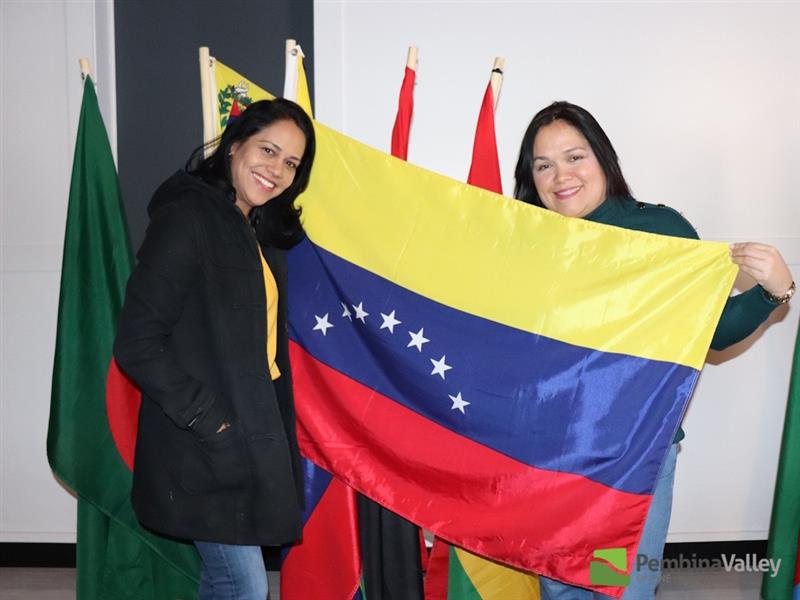
On January 3rd, the United States captured Venezuelan President Nicolás Maduro and his wife, Cilia Flores, in a large-scale strike.
While the circumstances behind the sudden action reflect a complex constellation of past and present factors, as the world looks on to see what will happen as a result of the captures, one may wonder: How have Venezuelans on the ground been affected? And their family members abroad?
In short, for most Venezuelans, it’s a time of ambivalence that oscillates between hope, fear, uncertainty, and even suspicion.
Confusion mixed with cautious optimism
Suner Gascon, who left Venezuela 14 years ago and now lives in Altona, said that she stays closely connected with her family and friends who are grappling with what the removal of the country’s president will mean for them.
For some time now, long before the large-scale strike, Venezuelans have been battling ongoing social unrest, economic strife, and difficulties accessing basic essentials.
The abrupt change in the country’s leadership has left citizens wondering whether the difficult stretch is over or if new factors will prolong it.
People are emotionally exhausted. Years of instability have taught them to survive, not to dream easily, and even positive changes are met with skepticism because hope has been broken too many times before.
-Venezuela native Suner Gascon on the current sentiment in the country.
“What hear most is confusion. Confusion mixed with cautious hope,” said Gascon.
“Any major political or military shift immediately affects daily life. People worry about access to food, medicine, electricity, and personal safety before anything else.”
She said that for some, the possibility of leadership change has brought a “sense of relief,” especially for those who have suffered persecution or economic struggles under the Maduro administration, but others are not so optimistic.
“[Some] remain deeply cautious because they have lived through many announcements and promises that did not result in real change.”
High emotions surrounding political prisoners
Gascon said that as daily life continues under stressful circumstances, another current concern for Venezuelans is what the change in administration means for the political prisoners.
In recent days, a handful of opposition leaders have been released from prison in the country by the government of acting President Delcy Rodríguez, and the citizens are holding their breath that this will continue.
I know nobody does anything just for free, but the situation that we had before was really bad.
-Venezuela native Suner Gascon on the mixed feelings surrounding the removal of the country's president.
“The release of political prisoners or even news about potential releases has been emotionally overwhelming for many families,” said Gascon, adding that while citizens feel “joy and relief,” they are also in pain over the condition in which their loved ones may be recovered.
“Torture, imprisonment, and separation leave long-lasting scars. I just watched a video of [a released prisoner], and his daughter was in front of him, and she [said], ‘Daddy, I'm your daughter,’ and he ... couldn't recognize her, and he could [hardly] walk. It was a really tough video.”
According to Gascon, the fear is amplified by uncertainty, as citizens do not know whether their loved ones are still detained — or, if they are, whether they are still alive.
“There are still so many questions,” she said.
‘People are emotionally exhausted’
Ultimately, Gascon said that as Venezuelans encounter new waves of uncertainty, they are “coping the only way they know how.”
By taking it one day at a time.
Because the economic landscape makes it difficult to plan for the future, some citizens are also considering leaving the country, especially young people.
“They don't trust the change will last," explained Gascon, noting that the circumstances have created a fracture in Venezuelan communities.
"Families are split across countries, relying on remittances and constant communication. People are emotionally exhausted. Years of instability have taught them to survive, not to dream easily, and even positive changes are met with skepticism because hope has been broken too many times before.”
Finding a more stable life in Altona
Gascon herself was one of the numbers who decided to leave Venezuela due to the quality of life that she and her family, which includes her husband and three children, had there.
Related stories:
- Morden home invasion remains under investigation, police say public at large not at risk
- Stolen credit card leads to drug arrests at Roseau River First Nation
Although she misses the beautiful parts of the country — the tropical climate, scenic beaches, and the feeling that everyone one encounters on the street is family — she is happy to be in Altona, where she has been welcomed since day one, even before she spoke English.
“We [were] in Winnipeg for about 10 months, and then my husband found a job in Altona,” she said.
“When we moved to Altona, oh my gosh, I felt like everybody was waiting for us. It didn’t matter if they could understand us in that moment. They were trying to help us in different ways, like finding somebody else who speaks a little bit of Spanish or trying to [communicate with] pictures ... and trying to make us comfortable.”
Hopes for Venezuela
Although she has started a new life in Canada, Gascon hopes that Venezuela can rebuild its relationships with other countries based on “human rights, dignity, and cooperation.”
“International attention and pressure have helped expose abuses, and that matters. At the same time, there are worries that foreign involvement could be used as an excuse for more repression, and that ordinary people will pay the price of political decisions,” she said.
“What people want most is support that helps rebuild institutions, not action that deepens suffering.”
The people are not the problem. Venezuelans are resilient, hardworking, and deeply traumatized. What we need is empathy, patience, and sustained support.
-Venezuela native Suner Gascon on her people.
When it comes to the actions of the United States government, she reiterated that Venezuelans remain vigilant about what it means.
“I just want people outside [the country] to keep hope that the things that are happening now in Venezuela are for good,” she said.
“I know nobody does anything just for free, but the situation that we had before was really bad.”
Gascon added that while talks outside the country tend to center on Venezuela’s natural resources, at the end of the day, its citizens “don’t care” about that.
They care about their family members having access to food, medicine, and other necessities.
‘It’s not about politics, it’s about survival’
As for what Gascon hopes those outside Venezuela keep in mind about the situation, her message hinges on just that — the well-being of her people.
“For us, it's not about politics, it's about survival. Venezuelans didn't leave the country because they wanted to. We left because there was no food or medicine. People were tortured, kidnapped, or killed just for speaking out. Families were forced to separate just to stay alive,” she said.
“The people are not the problem. Venezuelans are resilient, hardworking, and deeply traumatized. What we need is empathy, patience, and sustained support.”
She added that seeing her country in the news gives her hope that the attention will bring more eyes to what is "actually" happening there.
“All I can do is hope that whatever happens, it brings real change. The kind that helps my people and gives them a future again,” she said.
With files from Robyn Wiebe











 Fri, Feb 13, 10:26 AM


 Manufacturing, Skilled Trades, Full-time
 Featured